For years, the free-zone versus mainland question decided where a firm could trade. Since Executive Council Resolution No. 11 of 2025 and the mainland permit, it decides something narrower: where a firm sits, what services it buys, and where its revenue is taxed. This is a guide to what changed, not legal or tax advice. Rules differ by sector, so ask an adviser before you sign.
What has changed for free-zone firms?
Dubai now has a defined route for a free-zone company to work outside its zone.
Executive Council Resolution No. 11 of 2025 says any company licensed by a free-zone authority may operate outside the free zone and within Dubai, as long as it gets the licences or permits it needs from the Department of Economy and Tourism (DET). The route can be a branch licence, a branch with its headquarters in the free zone, or a permit for specific activities. The branch licences are valid for one year and can be renewed.
One group sits outside the resolution: financial institutions licensed to operate in Dubai's financial centre.
What does the mainland permit cost and cover?
The Free Zone Mainland Operating Permit is the light option. It is valid for six months, costs AED 5,000, and renews for the same fee every six months.
Key terms from the Dubai Media Office announcement:
- Eligible companies hold a Dubai Unified Licence and apply online through the Invest in Dubai platform.
- The initial phase covers non-regulated activities, including technology, consultancy, design, professional services and trading. The framework plans to extend to regulated sectors.
- Mainland revenue is subject to 9% corporate tax, and the company must keep separate financial records in line with Federal Tax Authority requirements.
- A company can use its existing staff in mainland operations.
The same announcement says the permit could benefit over 10,000 active free-zone firms. That is an official projection of reach, not a count of permits issued. We found no data on how many firms have used it.
What does a free zone still offer?
A free-zone office is usually a package: space, a licence and services under one roof. The office is not the only thing on offer. Zones also compete on terms.
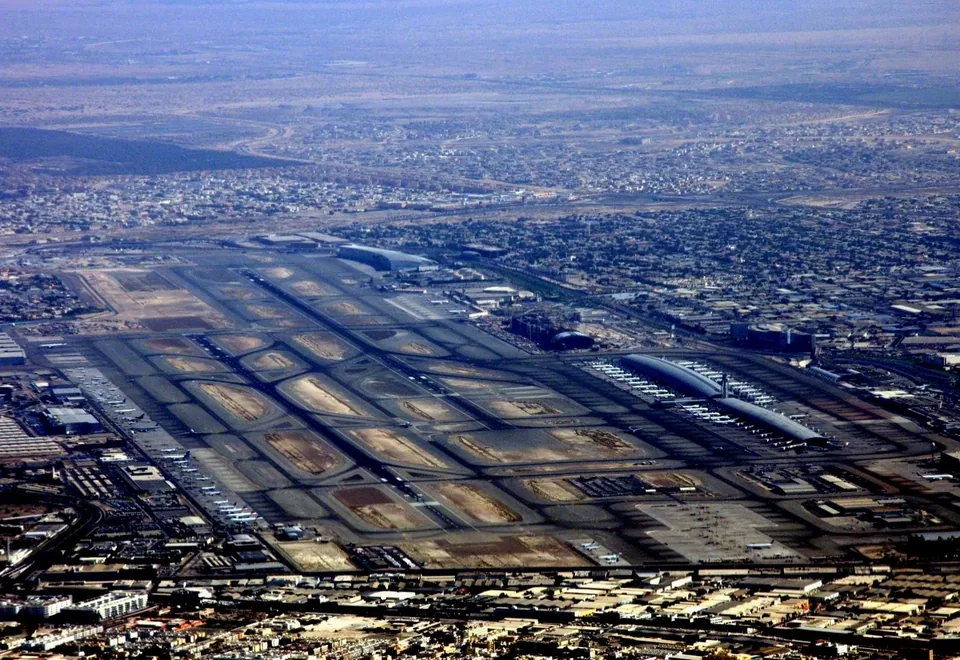
In April 2026, the Dubai Integrated Economic Zones Authority (DIEZ), which runs Dubai Airport Freezone, Dubai Silicon Oasis and Dubai CommerCity, announced measures for companies in its zones. They include the option to pay rent in monthly instalments, with instalment-related fees waived. DIEZ said the aim was liquidity and business continuity during a temporary regional situation.
Demand has stayed high. DIEZ reports 96% occupancy across its three zones in the first half of 2026, and 13% more companies than a year earlier. High occupancy shows free-zone space is not a fallback. Many firms still choose it on purpose.
We found no data on whether the permit has changed demand for free-zone offices.
There is one more difference to keep in mind: the paperwork. Resolution No. 11 of 2025 sets a timetable. It requires DET, together with the licensing authority, to issue a list of the economic activities that establishments can carry out in Dubai within six months. Establishments already operating outside their zones when the resolution took effect must comply within one year, which DET may extend by another year. Licensed establishments are also subject to inspection.
So the route is open, but its scope is set activity by activity, and the permit has yet to reach regulated sectors. A firm that depends on a specific activity should check the current list.
Who is the landlord behind three of Dubai's free zones?
A firm that picks one of the DIEZ zones picks an authority as well as a building. DIEZ was established in 2021, according to Khaleej Times. Its chairman is Sheikh Ahmed bin Saeed Al Maktoum, and Dr Mohammed Al Zarooni is Executive Chairman, as reported by WAM via Zawya. The authority also runs an investment arm, Oraseya Capital, and a start-up hub, the Dubai Technology Entrepreneur Campus.
DIEZ's own site describes each zone in a different way:
- Dubai Airport Freezone, established in 1996, is a business hub beside one of the busiest international airports.
- Dubai Silicon Oasis, established in 2003, is a knowledge and innovation zone with living and working space together.
- Dubai CommerCity, established in April 2021, is a free zone for digital commerce. It is a joint venture between DIEZ and Wasl Group.
The labels are a guide to the kind of lease on offer. A trade firm at the airport may need a small office next to storage and customs access. A technology firm may want labs, meeting space and a campus feel. A digital-commerce firm may want a desk and a warehouse unit in one place.
Read the 96% figure with care. It is an authority-wide figure that does not split office space from logistics, retail or other space. We found no published total of office area across the three zones and no published rents. The workforce grew 24% while company numbers grew 13%, so on our arithmetic the average firm in these zones is getting bigger, and bigger firms need larger floors.
Two pipelines with office space are public. At Dubai Silicon Oasis, DIEZ reports District IO, backed by AED 11bn, and Block 14, a AED 1.8bn mixed-use first phase with one commercial building, two residential buildings and a retail district, beside the planned Dubai Metro Blue Line station and due in 2029, per the same Zawya report. At Dubai CommerCity, a separate second phase of more than AED 1.8bn includes six office buildings, which we cover in our CommerCity piece. The two AED 1.8bn figures are different projects. At Dubai Airport Freezone we found no new office project in the sources we read, which is a gap in what is public, not proof that nothing is planned.
At CommerCity, the new office buildings are offered as shell-and-core, fully fitted or plug-and-play, according to Entrepreneur Middle East. We have seen no evidence that the three zones coordinate pricing or tenant targeting, and we have not verified how easily a firm can move between zones without a new licence process. Both are questions to put to the authority.
Who should look at a mainland office?
The permit lets a free-zone firm try mainland work without a mainland office. A mainland office is a different commitment. It may suit a firm in these positions:
- Many of its clients are on the mainland and want to meet nearby.
- Its activity falls outside the non-regulated list the permit covers in its initial phase.
- It needs a branch licence valid for a year rather than a six-month permit.
- It has grown past a desk and wants a floor it controls.
Treat this list as a starting point. Sectors and exceptions apply, and the rules are still being extended. An adviser can check them against your licence.
Whatever the choice, check the lease itself. Free-zone rent, mainland rent and service charges work differently, and the cheaper headline is not always the cheaper bill. Ask what is included, what is billed separately, and what happens at renewal. DIEZ's instalment option, for example, applies to companies in its zones. A mainland landlord may offer different terms.
How should a firm decide?
A short checklist helps, in this order.
1. Clients: where are they, and do they need to see you nearby? 2. Sector rules: is your activity covered by the permit's current scope? 3. Tax: how much of your revenue will be mainland revenue, taxed at 9%? 4. Desk needs: do you want a packaged office or your own space? 5. Growth room: can you expand in the same place, or inside the same authority, without a new search?
Some firms still testing Dubai may keep a free-zone office and use the permit for mainland clients. Firms with a settled mainland client base may look at a mainland office. Our guide to who is entering the market is in Firms entering and expanding.
Neither route is better in itself. The free zone gives a packaged base and, in some zones, flexible terms. The mainland gives proximity to mainland clients and a different licence. The permit now lets a firm use some of both, so the choice is which mix fits your clients and your budget this year.
What to watch
- How many firms take the permit, and whether it is extended to regulated sectors.
- Whether free-zone occupancy stays near 96%.
- Whether DIEZ publishes office area, rents or occupancy for each zone.
- Whether Dubai Airport Freezone announces new office space.
- Whether mainland landlords start to compete with zone-style terms.
- Whether tenants move between zones inside the same authority.
Bring the free-zone question to “Dubai Office Summit” in Dubai CommerCity.
 What Dubai tenants now ask of landlords, and which landlords say yes
 Moving to Dubai? Why new firms tend to start with a small office
 Dubai's office supply wave is coming. The real question is who will own it
 Dubai's big tenants want one landlord. What does that leave the buyer of a single floor?
 Why Dubai landlords are bringing flex operators into large floorplates
 UAE banks are healthy but choosy. So who will fund Dubai's office owners?
 Who really owns Dubai's offices? The public record is thin, so read the deals
 Has Dubai's office market peaked? The evidence points to a pause, not a top
 Millionaires are heading to the UAE, but the route to office demand is indirect
 Gulf investors know what a London office is worth. Why is a Dubai tower so hard to price?