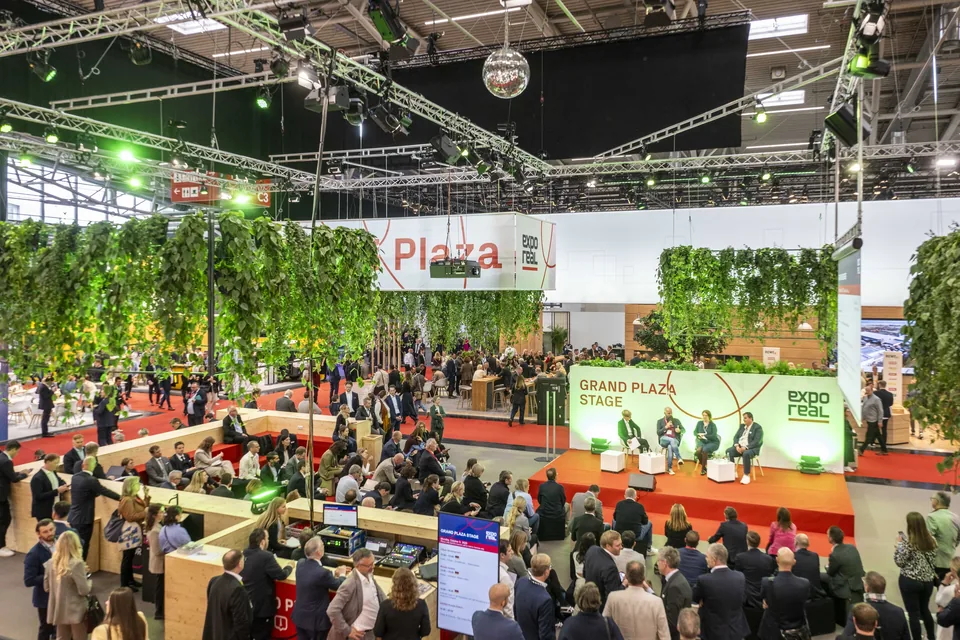
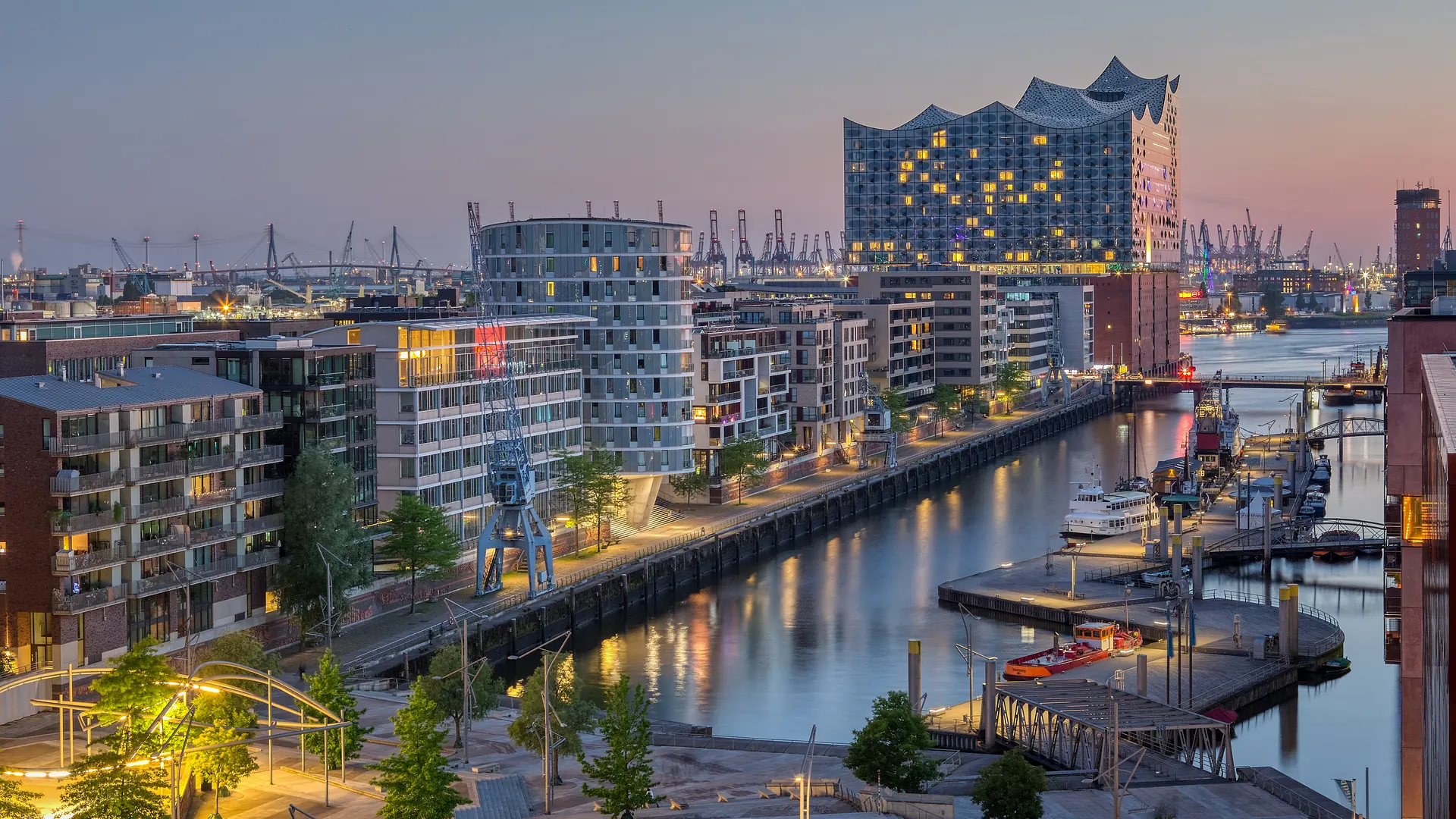

Hamburg investment rose nearly 60% in the first half. Frankfurt's fell a further 20%, on an already weak base. Both cities will be in the same halls on 5 October, and a fund manager who bought living assets in Hamburg this year and a workout desk running Frankfurt mandates are reading the same country from opposite ends of the same year. Munich, hosting the fair that puts them in the same room, is itself a third story again: the strongest prime office rent in the country, in a market that is also seeing vacancy rise.
The national numbers give both camps cover. JLL counts about €17.6bn of German investment in H1 2026, 15% above the same period a year earlier, with €7.9bn, 44% of the total, coming from international buyers. Living was the largest asset class at €5.8bn, and offices took just under €3.1bn. On its own separate first-quarter series, CBRE put domestic buyers closer to 60% of German volume, a different broker, period and method, so the two do not make a trend on their own; they simply confirm that both foreign and domestic capital are active. Prices have essentially stopped falling in aggregate: the Bundesbank's commercial property price index was 0.4% higher year on year in the second quarter, though offices alone were still 1.2% lower. "Stabilised" describes the index. It does not describe offices, a distinction The room can clear a price without closing a deal tests at the level of a single asset rather than an aggregate series.
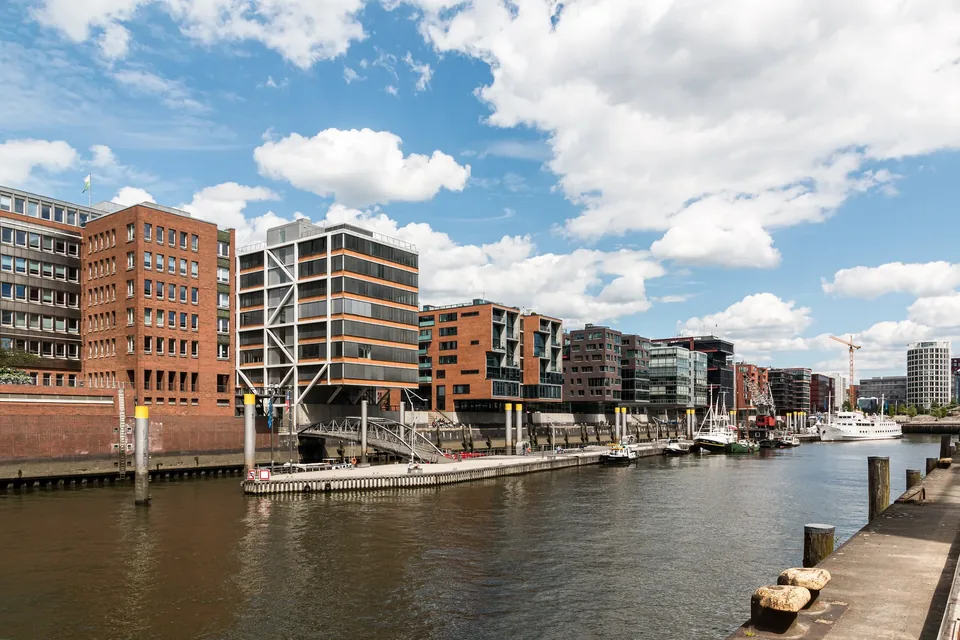
The city-level data is where the national story breaks apart. Big 7 office vacancy reached 8.5%, about 8.5 million sqm, up from 7.7% a year earlier, even as prime rents rose 5% over 12 months to €62 per sqm per month in Munich, €55 in Frankfurt and €48 in Berlin. Rising vacancy alongside rising prime rents is not a contradiction; it describes a market splitting by specification and location, where the best space in the best micro-location commands more, and everything else sits empty for longer. Capital markets have not closed that split either: JLL's average Big 7 prime office yield stood at 4.46% in Q2, 15 basis points wider on the quarter, itself a sign that pricing is still moving, not settled. Inside Munich itself the split is starker: CBRE puts city-centre office vacancy at 1.7%, against 13.9% in the periphery, as of Q2 2026.
The investment volumes by city make the split concrete. Berlin took just over €1.6bn, 17% down year on year. Hamburg took just under €1.6bn, nearly 60% up. Frankfurt took €530m, down a further 20%, the weakest of the three cities on this measure even though its prime office rent sits above Berlin's. A Frankfurt lender assembling a workout mandate this month, a Hamburg fund manager closing on a living asset, and a Munich office investor paying up for the best available space are each behaving rationally in their own postcode. None of their experiences generalises to the country.

The financing backdrop sharpens the split rather than smoothing it. The ECB raised rates by 25 bp at its 10 Sep meeting, effective 16 Sep: deposit rate 2.50%, main refinancing rate 2.65%, up from a 2.00% deposit rate a year earlier, which moves the arithmetic against anyone refinancing a loan fixed before the reset. Against that backdrop, 72% of the 134 lenders surveyed by CBRE across Europe planned to increase 2026 origination, but 66% would not lend against an asset that fails sustainability criteria without an improvement plan, a screen that has more bite in a weaker office submarket than a strong one, and one examined in full in The lender is also on a clock. As host market, Germany also carries the programme's centre of gravity. Roughly two in five of the 258 public sessions name Germany or a German city, and 181 of all 258, 70%, are held in German. That includes the week's core financing sessions, among them panels on refinancing gaps, non-performing loans and who will finance tomorrow's property market, and the Germany route through the programme is the fastest way to find the city and submarket behind any given session.
What to test in Munich
- Ask any speaker citing a German recovery figure to name the city and submarket it applies to, and check it against the JLL and CBRE city-level data before repeating it.
- In a financing session, ask whether an asset's failure to meet a sustainability screen, not just its city, is what is keeping it out of the refinancing pool.
- Track whether Frankfurt's investment weakness comes up as a talking point in its own right, given it sits below Berlin and Hamburg despite a higher prime rent.
Sources
- JLL, Germany Investment Market Overview Q2 2026, published 13 Aug 2026
- JLL, Germany Big 7 office market dynamics Q2 2026, published 14 Jul 2026
- JLL, Germany Housing Market Monitor Q2 2026, published 22 Jul 2026
- CBRE Research, Munich Office Market Q2 2026, published July 2026
- CBRE, Gradual recovery on Germany's real estate investment market, published 13 Apr 2026
- Deutsche Bundesbank, Commercial property price index, Q2 2026 results
- ECB, Monetary policy decisions, 10 Sep 2026
- CBRE, European Lender Intentions Survey 2026, published 16 Jun 2026
- EXPO REAL, conference programme, read 24 Sep 2026

 The lender is also on a clock
 The room can clear a price without closing a deal
 Czechia & Slovakia: whose money sets the price?
 Romania's yield premium: a reward for moving first or a warning?
 The new asset is not always a building