


Prague's prime office yield closed 2025 at 5.00%, a full point tighter than Warsaw's and the tightest reading on Cushman & Wakefield's whole CEE list. A fund manager buying into that price this autumn cannot easily tell whether it is a compliment to the market or a warning about it, the same test Poland arrives city by city, not as one pavilion runs against its own regional pricing. The Czechia & Prague National Exposition will tell her the tight pricing reflects a deep and stable domestic bid. The evidence supports that story, and it supports a second one just as easily: that the same tightness could mean too few sellers, not too many buyers, and that an outside buyer is being quietly priced out of the market the stand is inviting her into.
The exposition itself is new in name only. It takes A2.430, run by SIRS, the state investment and development company, with the state, key municipalities and private developers under one banner. Co-exhibitors range from the state agency CzechInvest and the cities of Prague, Ostrava and Ústí nad Labem to developers such as Accolade Holding, Penta Real Estate and Sekyra Group. The address has hosted a Czech collective stand under different names since at least 2018. Poland does the opposite next door, selling itself through four separate city stands rather than one national umbrella, and the contrast is instructive: one country presents itself as a single market with the state vouching for its sites, the other lets its cities compete on their own.
The capital data supports the depth reading, cautiously. Cushman & Wakefield counts €11.8bn of investment across its CEE-7 markets in 2025, up 34.0% on the year, and attributes a record 65% of it to CEE-based investors. Colliers, on a different series, puts CEE-6 volume at €5.8bn for the first half of 2026, with Czechia above €1.4bn; the two brokers measure differently, so we read them side by side rather than combine them. Nobody publishes a Czech-only buyer split.
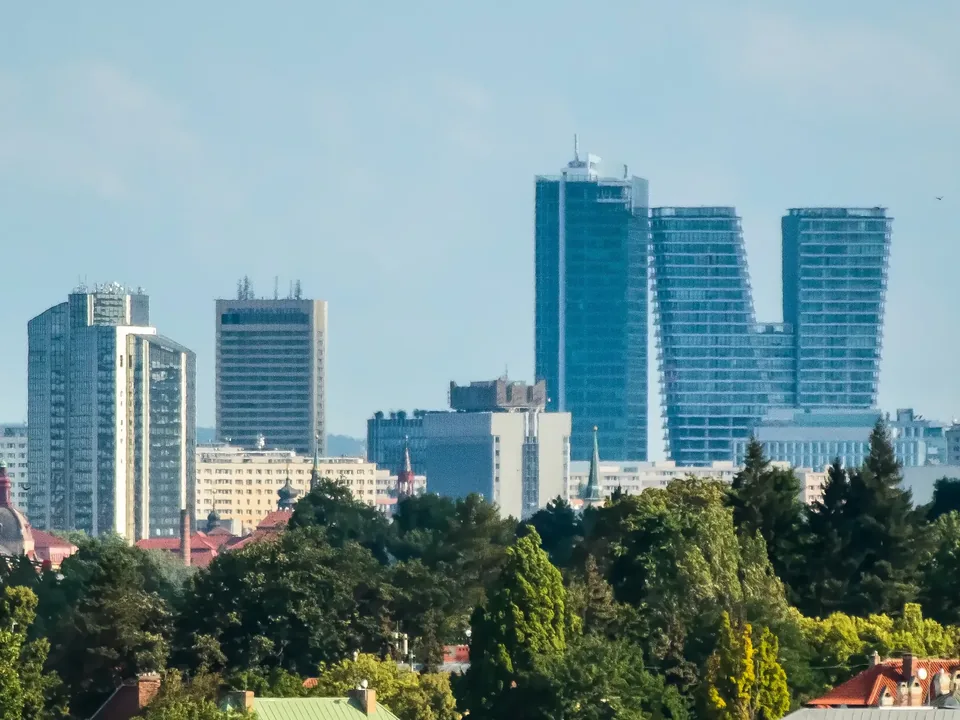
The pricing evidence is the sharpest part of the picture. Prague's Q4 2025 prime office yield of 5.00% sits 100 basis points inside Warsaw's 6.00% and 225 inside Bucharest's 7.25%, on Cushman & Wakefield's benchmark. Banks are lending selectively, at senior loan-to-value ratios of 50 to 60%, so equity carries much of each deal, and most of that equity has been regional. The depth reading says a broad domestic bid of funds, developers and private capital holds that pricing firm and gives sellers an exit that does not wait on foreign buyers. The scarcity reading uses the identical number to argue the opposite: a tight yield can mean few sellers rather than many buyers, pushing an international fund toward secondary stock where the exit depends on the same regional pool, and where the same broker already expects the gap to the compliant prime segment to widen.
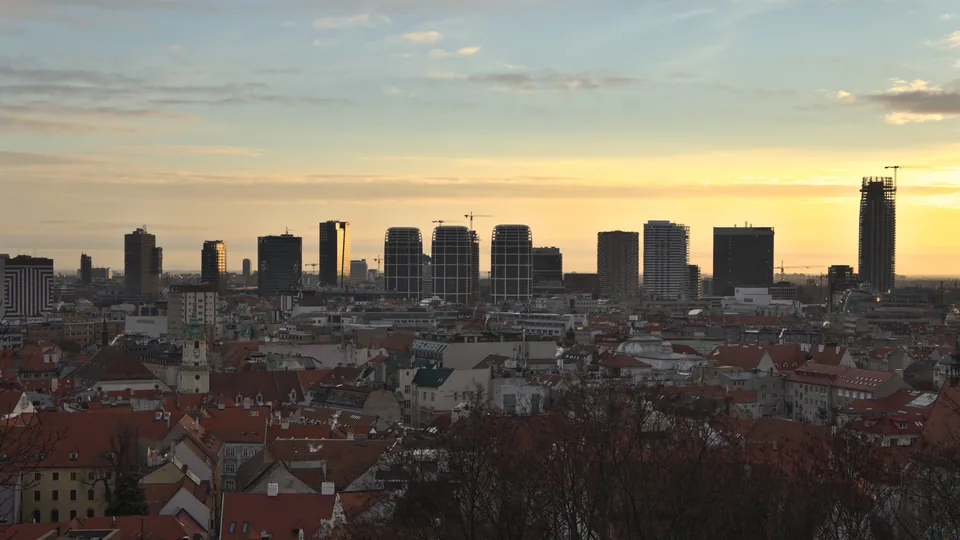
Slovakia complicates the picture rather than resolving it. Bratislava's prime office yield of 6.25% sits 125 bp above Prague's, and no Slovak national or city stand appears in the fair's directory. Several firms selling Slovakia in Munich also sell Czechia from the same booth, among them Penta Real Estate, Savills and White Star Real Estate, which suggests Slovak pricing is being read through a Czech lens rather than set independently. Prague's own pipeline is the other open variable: a newly approved Metropolitan Plan and an amended Building Act could bring new prime supply to market faster, which would weaken the scarcity reading if it materialises, though neither the timing nor the volume of that supply is public yet. Romania's yield premium: a reward for moving first or a warning? runs the same entry-versus-exit test at the wide end of the region's yield range. Our read: with a national stand vouching for the market and no sign yet of forced selling, depth is the better-supported story, but it is a read worth re-testing against the non-CEE buyer share the moment Prague publishes one.
What to test in Munich
- Ask a Czech fund manager the entry yield at which they would still buy prime Prague this quarter, and whether that number has moved this year.
- Ask a broker what share of this year's Czech deals closed with a buyer from outside CEE, and whether that share is rising or falling.
- Ask a Slovak lender whether they price Bratislava risk as its own market or simply as Prague's neighbour, and at what loan-to-value.
Sources
- Czech Republic (Prague), EXPO REAL 2026 directory listing, accessed 24 Sep 2026
- Tatra Banka, EXPO REAL 2026 directory listing, accessed 24 Sep 2026
- Cushman & Wakefield, CEE Investment Market Update H2 2025
- Colliers, CEE Investment Scene H1 2026, published 30 Jul 2026
- EXPO REAL, conference programme, read 24 Sep 2026
- Property Forum, Poland & CEE Conference Session at EXPO REAL 2026

 The lender is also on a clock
 The room can clear a price without closing a deal
 Germany is reopening by postcode, not by headline
 The new asset is not always a building
 Poland arrives city by city, not as one pavilion